

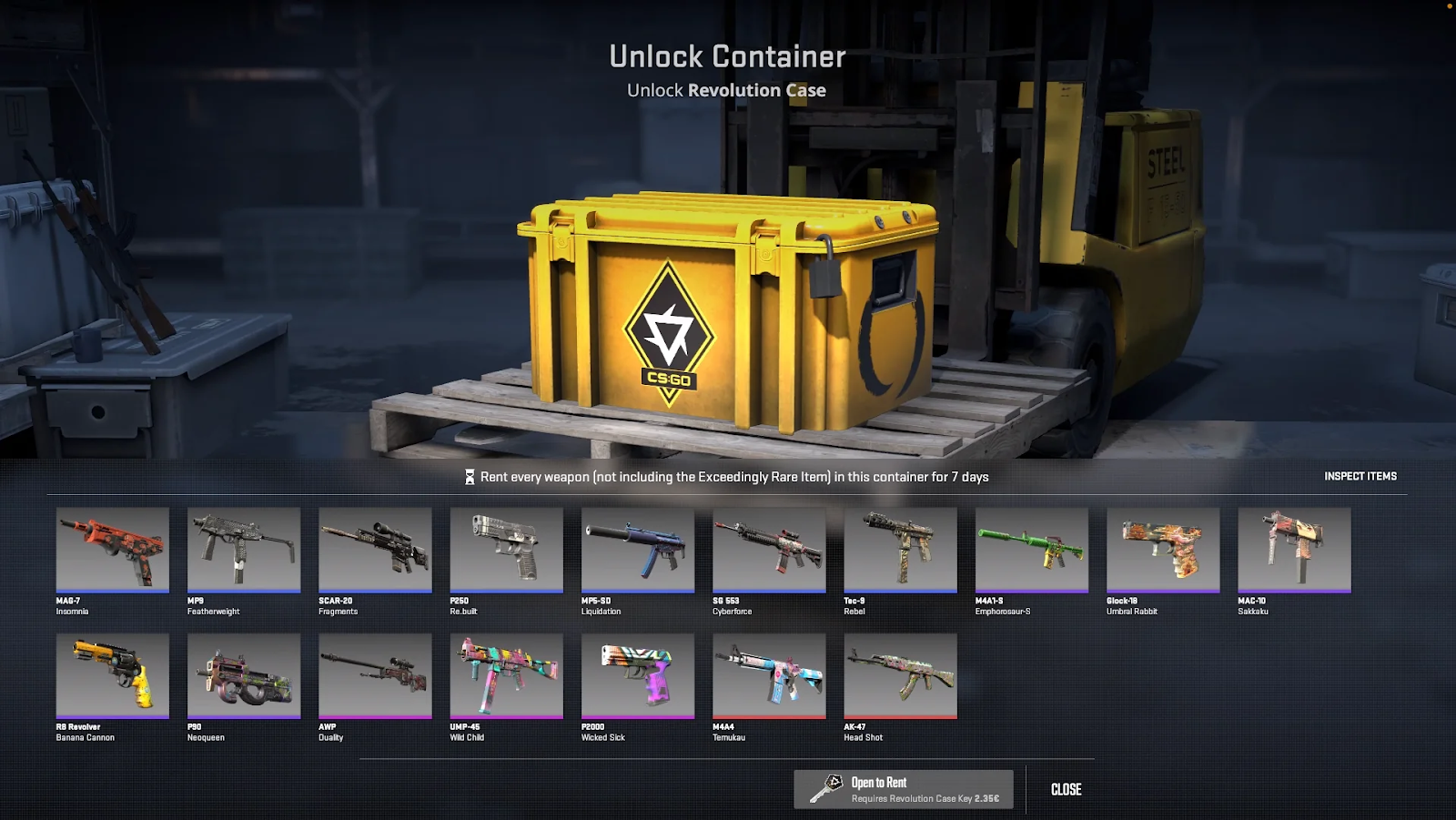
Since June this year, all games containing random items for payment (opening boxes, drawers, etc.) will be uniformly recognized as 16+ in the pan-European game information age rating system. This change also extends to the assessment of in-house purchases, online communication and “inducing continuous games” through incentive mechanisms such as daily assignments.

Complete update:Payment of random items:Games containing random items for payment, such as a card bag, a draw card system or a key to unlock a war booty box, will be rated PEGI 16. Social casino games are rated as PEGI 18.Game inbound:Games offering time-limited or limited-volume preferences (e.g. fee-paying pass or countdown preferences) will be rated PEGI 12. If, however, the game contains the option of default closure of the consumer function parent control, the rating can be down to PEGI 7. Any game containing NFT purchases that are necessary for the game and can be traded in the game will be rated PEGI 18.Game pressure:Any game that provides an incentive for a player to repeat a visit or a “scheduled play card” mechanism (e.g. a daily mission or a continuous landing incentive) will be rated PEGI 7. A game containing a fee-paying pass and a reward that cannot be obtained without achieving a specific goal will be rated PEGI 12. Similarly, if the player does not return to the game, the acquired content or state of the game may be lost will also be rated PEGI 12. In particular, trophies have been strengthened globally. Belgium banned trophies as early as 2018 (although there were indications that the ban had not been strictly enforced), while Australia required an open-box rating of 15+ for all games starting in 2024. PEGI ‘ s current rule adjustment may mean that a number of well-known series are about to be launched with an age rating that may be much higher than expected by the developers.
The PEGI system covers almost the whole of Europe. In the United Kingdom, the British Film Classification Commission has been replaced since 2012 to take over the legal responsibility for game classification. One of the few countries in Europe not using PEGI is Germany, whose own rating system USK was established earlier than PEGI. In 2023, in order to comply with the updated German Youth Protection Act, USK undertook a radical reform to include, among other things, open boxes and network risks in its rating. Today, PEGI is also beginning to emulate it. In an interview with the Game Industry News, PEGI Director General Dirk Bosmans said: “We actually work closely with USK to ensure that we are consistent again. Because as far back as three years ago, you’ll find that USK’s ratings are very similar to PEGI.” The last major update of the PEGI was the introduction of the “Intra-game” content label in 2019, and now the “on-line interactive style” such as time-bound or time-limited purchases will be directly reflected in the age rating.
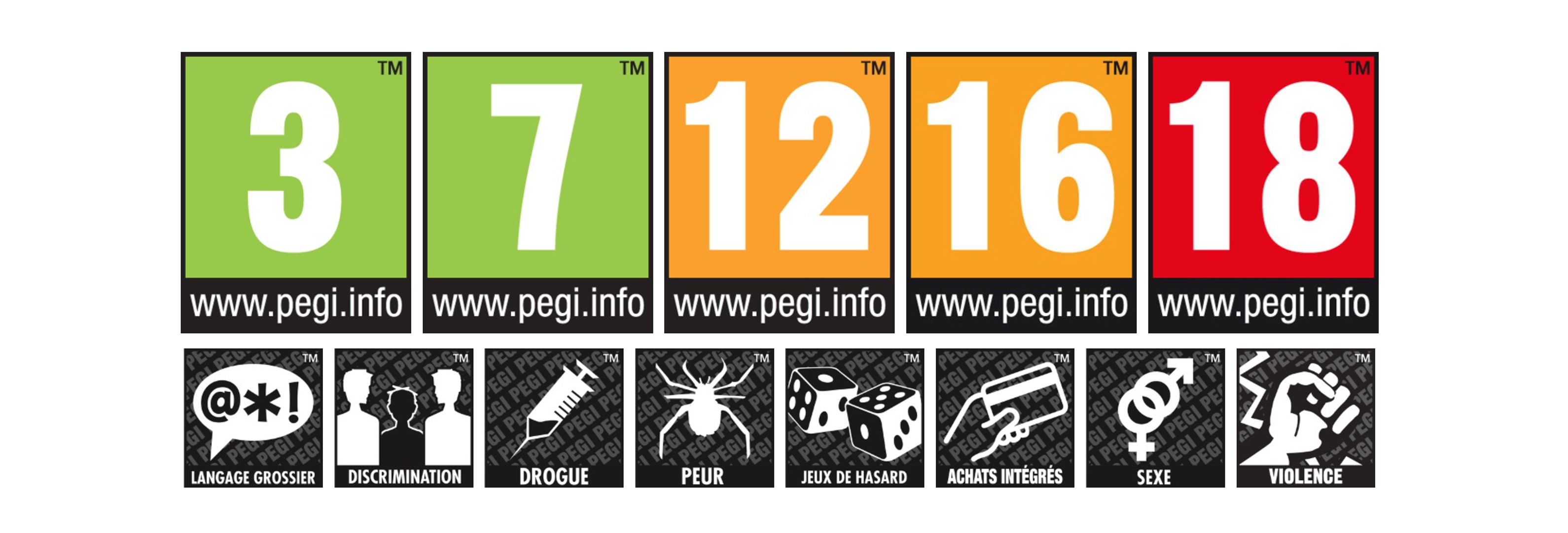
(PEGI five age groups and eight content labels)
Based on Germany ‘ s past experience, this could affect the rating of a large number of new games. In a statement, USK Managing Director Elizabeth Secker said: “At least 30 per cent of all the games submitted since we updated the system were at least a new USK standard. About one third of these games are thus awarded a higher age rating.” Traditionally, PEGI has focused on the content of games, such as sex, violence and drugs. But Decker explained that there is a growing need to provide guidance to parents in the context of games, including with whom, how long and how the games induce consumption. He spoke about PEGI’s study of how Germany introduced these changes and how to consider how to replicate them: “What’s interesting is that USK introduced environmental factors embedded in the game company to reduce risk. We are also considering introducing this. If the game by default shuts down the internal purchase function, i.e. parents need to enter the game and open the consumption function, so that the child will normally not be able to access any of these internal purchase preferences, the game will receive a PEGI 7 rating.” Is the same rule applicable to paid random items if the game is by default closed for consumption? Dirk replied: “Not at this time, but perhaps in the future.” He added that much remained to be done to convince legislators of the effectiveness of the play-parent control systems, although they had made great strides. “The parental control function is now a very easy mobile application. If parents are willing to spend time learning about these tools, they find them very effective. But we are not yet in position to convince legislators of their concrete effects. This effectiveness will increase, especially in the debate on age certification. That is my hope, and that is my hope. We may then be able to apply them more generally to our standards.”
Decker indicated that PEGI had consulted with industry before introducing these changes. Its management committees include representatives of game companies and a number of national trade associations. PEGI also worked with academics to gather evidence and consulted reviewers from agencies such as the Game Rating Authority. “In assessing the impact of these age ratings, we rely very much on their advice.” PEGI is also keenly aware of the general trend in European legislation. Decker said, “I think that the Digital Services Act and the Digital Equity Act have clarified the coming of change, and, while we have been concerned for some time, we realize that our previous interpretation of the parental control tool is inadequate. Therefore, as pressure rises, you need to assess the extent to which you are going to improve.” He concludes by stating that the fundamental purpose of these changes is to ensure that parents have the fullest possible information.” If a game is 16+ and parents let 14-year-olds play, it is based on the premise that parents are already aware that their children are mature enough to accept the game, it is a well-thought-out decision, which is quite different from “I don’t know what this is, go play, I don’t care.” He also acknowledged, however, that this would inevitably face resistance from some game companies. “It is conceivable that in the next few months, some of the factory chambers of commerce felt, ‘This is too much.’ But I’d like to ask them to take stock of the situation and understand the circumstances: Regulatory pressure on the one hand, and industry responsibility on the other, and how to find a balance between the two.”