
Chief Executive Officer Supercell, Ilkka Paananen, has recently publicly criticized the Digital Fairness Act under consideration in the EU and the new guide to the Consumer Protection Cooperation Network, warning that these proposals could have a devastating impact on the game industry in Europe. Ilkka Paananen, through his co-authorship, notes that these proposals are aimed at protecting children and vulnerable players through strict regulation of digital currency transactions within the game, if they are adopted or will “kill the EU game business” and “disrupt” the operating models of the numerous free European games.
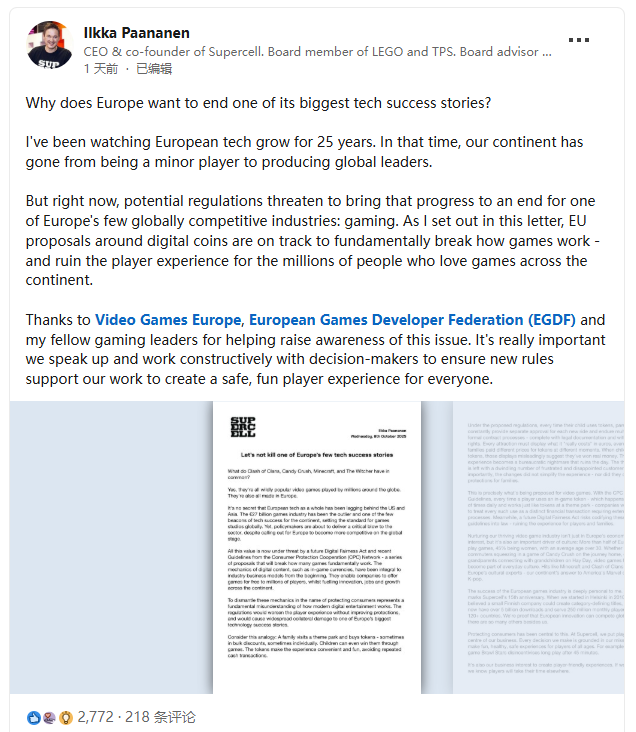
“The abolition of these mechanisms in the name of consumer protection reflects a fundamental misunderstanding of the modern way in which digital entertainment operates.” Ilkka Paananen wrote: “These provisions not only fail to enhance the effectiveness of protection, but will worsen the player experience and will cause extensive collateral damage to one of Europe’s most successful fields of technology.” He further stressed that the relevant legislation “would hit the industry hard and could not effectively protect players”, and called for a more substantive dialogue between EU regulators and the industry before a final decision could be taken. “Today’s decision will determine whether Europe continues to prosper in the digital industry or whether it will be a counter-edition to `good will to destroy competitive advantage’.” The European Federation of Game Developers (EGDF) has expressed support for the position of Ilkka Paananen and issued a statement on the same day stating: “The central role of money in free mobile games in the game is the cornerstone of the European mobile game industry. A major change in its operating logic would seriously undermine the competitiveness of the mobile game industry in Europe and jeopardize future growth.”
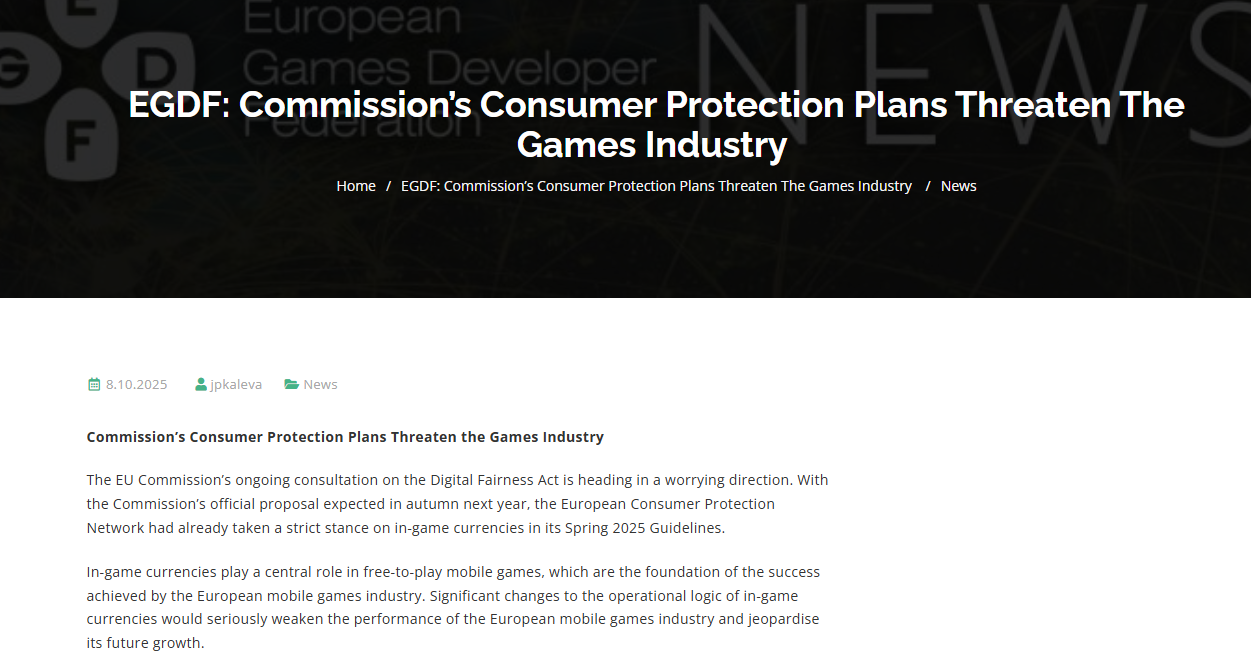
The difference is the definition of the currency in the game.EGDF considered that consumer protection agencies and the Commission wished to redefine it. According to the new guidelines and draft bill, the currency in the game is redefined as a “digital representation” of value, similar in nature to a virtual currency such as a bitcoin. For many years, however, the game industry has regarded the currency in the game as the digital content used in the game. If implemented by the new definition, each player ‘ s use of a virtual currency in a game will be considered as a purchase contract and the system will have to eject a window requiring the player to confirm the transaction one by one. For underage players, parental authorization is required for every transaction. This would not only completely destroy the experience of the game, but could also lead to the extreme risk that the player might misperceive that real money could be earned through the game. The game industry questioned the need for such regulation, as the user complaints it received never revealed a confusion between virtual diamonds and the real euro. Hendrik Lesser, President of the EGDF, emphasized: “When entrepreneurship and innovation meet a well-established consumer protection and good competition environment in the EU, success can be fostered. But regulation must be proportionate and based on real contradictions.”
According to the European Media Industry Outlook published in 2025, mobile games dominate the global market (50 per cent in 2024), with more diverse players than hosts/PC games. Mobile games account for as much as 62 per cent of the most common type of game and are ranked first. Moreover, PC online and host games account for 27 per cent and portable games for only 14 per cent. The data also show that only 35 per cent of players have paid for the game in the past six months, and 50 per cent have focused exclusively on free/free value added. Currently, the European Federation of Game Developers, which covers 27 industry associations in 23 countries, is making an active voice on behalf of more than 2,500 play development studios, most of them small and medium-sized enterprises, employing more than 40,000 employees. The final European Commission proposal on this matter is expected to be officially published in autumn 2026.