
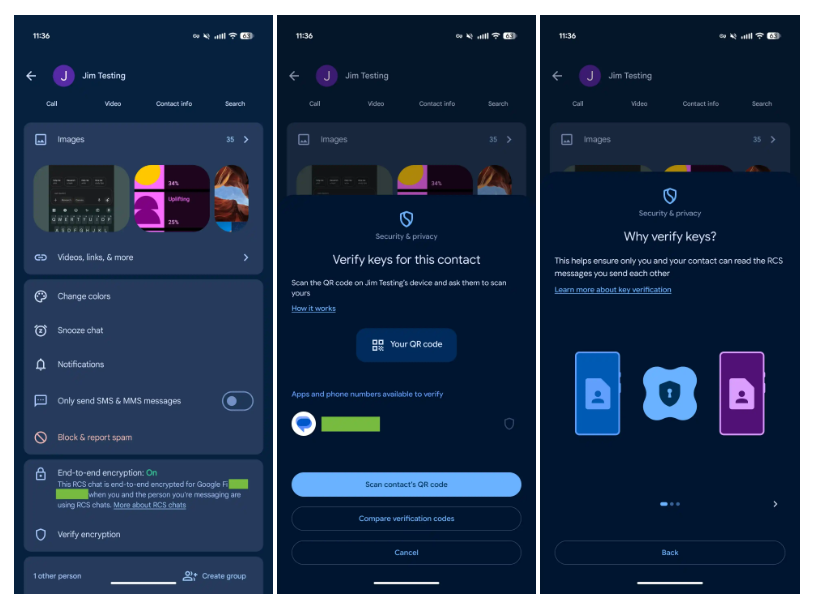
Google Messages began the gradual roll-out of a two-dimensional bar code (QR code)-based key validation to confirm that the user “is communicating with the intended contact”. When this feature is on line, the user can only find the end-to-end encryption card by clicking on the contact name in the application column in the details page. Previously, a “validation encryption” was shown with only 80-bit digital codes, and now the “safe and privacy” panel starts the “certification contact key ” process.
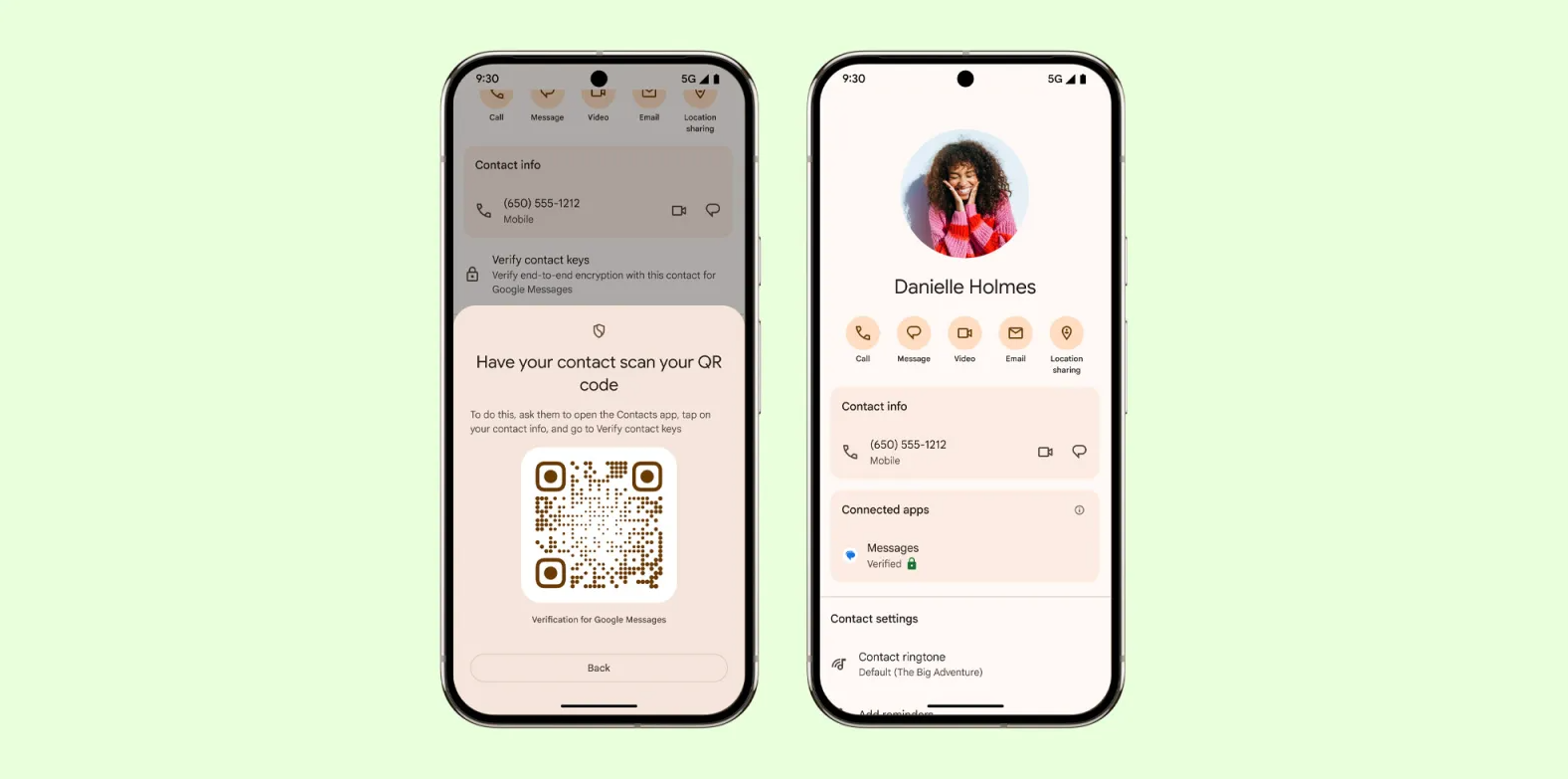
Google made it clear that the opening of the key to authenticate the contact person would ensure that only the two interlocutors could read each other ‘ s RCS messages. This function is activated by the QR code corresponding to each other’s scanned equipment, and the user can view the key authentication status through the Connected Applications application.
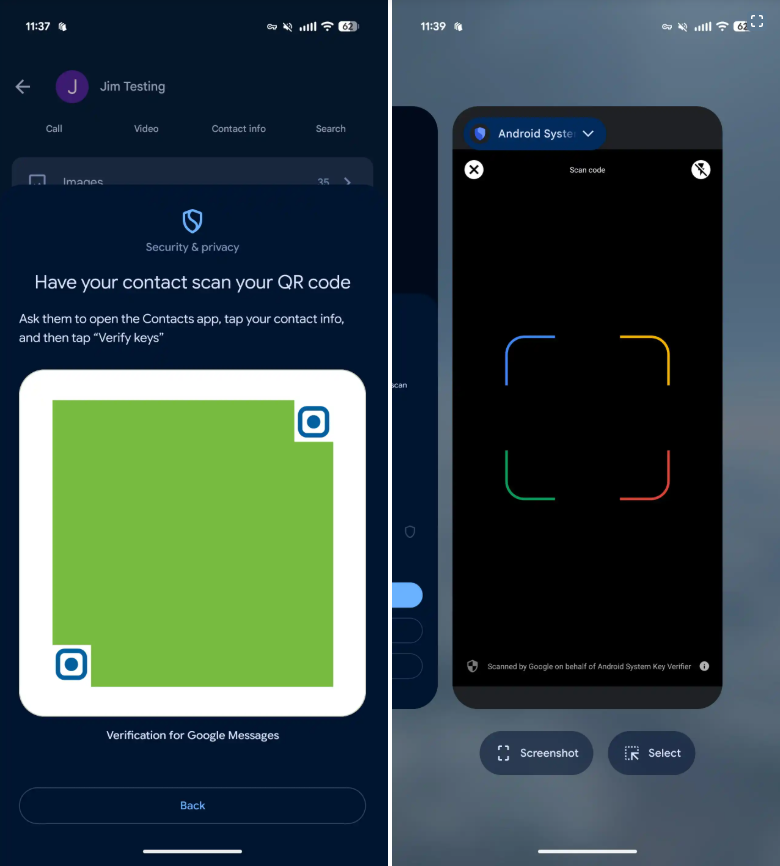
Click your QR code to open the Google Message Validation interface. It should be noted that while the current address book application is not yet active, the panel has its own “Scanning Contact QR Code” option, which calls the pre-enjoyed Android key validation application. The traditional 80-digit authentication method can still be used through the “comparison authentication code” in the panel.
Google’s shift to QR code was not only for convenience purposes, but more to remedy the weaknesses of the old system. SMS verification has long been criticized as a fragile security layer, vulnerable to SIM card exchanges, number hijackings and cyber fishing attacks. When users rely on text-based codes for dual identification or message authentication, this fragile security protection makes the outlaws and malicious attackers empty.
By introducing two-dimensional code certification in Google Messages, Google will reduce its reliance on previously vulnerable security certification programmes, while making encryption authentication easier. This recognizes the risk of texting while positioning the 2D scan as a safer, more humane alternative. The addition of a two-dimensional code validation feature to the information application indicates that this concept is being extended from account entry to the area of personal communications.
This feature is currently available only to users of the latest Google news Beta test, and the official version has not yet been distributed. Google announced last year that this feature will cover Android 9 and above in 2025 and that the Unified Public Key Certification System will be open to third-party applications in the future.
It is worth mentioning that this system is part of Google’s so-called Public Key Certification Unified System. This means that the certification method is not limited to Google Messages. In the future, other applications in Google Ecology may use the same mechanisms to achieve consistency and ease of use on different news platforms. If this vision is realized, the two-dimensional code validates or will become a common safety practice for the entire Android ecosystem.
This update is not just an upgrade of the information function, but represents a broader advance in the field of digital authentication. A 2-dimensional-based validation avoids the weakness of text messages, making it more difficult for attackers to use the operator system or to use fraudulent codes to deceive users. It also indicates that Google is making a sustained effort to promote key and passwordless landings on its platform, replacing obsolete programmes with systems that are more difficult to intercept and more user-friendly.